


Research consistently shows that people overestimate their level of self-awareness. And cognitive insight alone does not reliably lead to behavioural change.
CTRL is a coaching diagnostic that combines self-perception with a trusted external perspective, helping coaches explore perception gaps in how clients believe they respond to challenging situations.
-
Most people overestimate their self-awareness
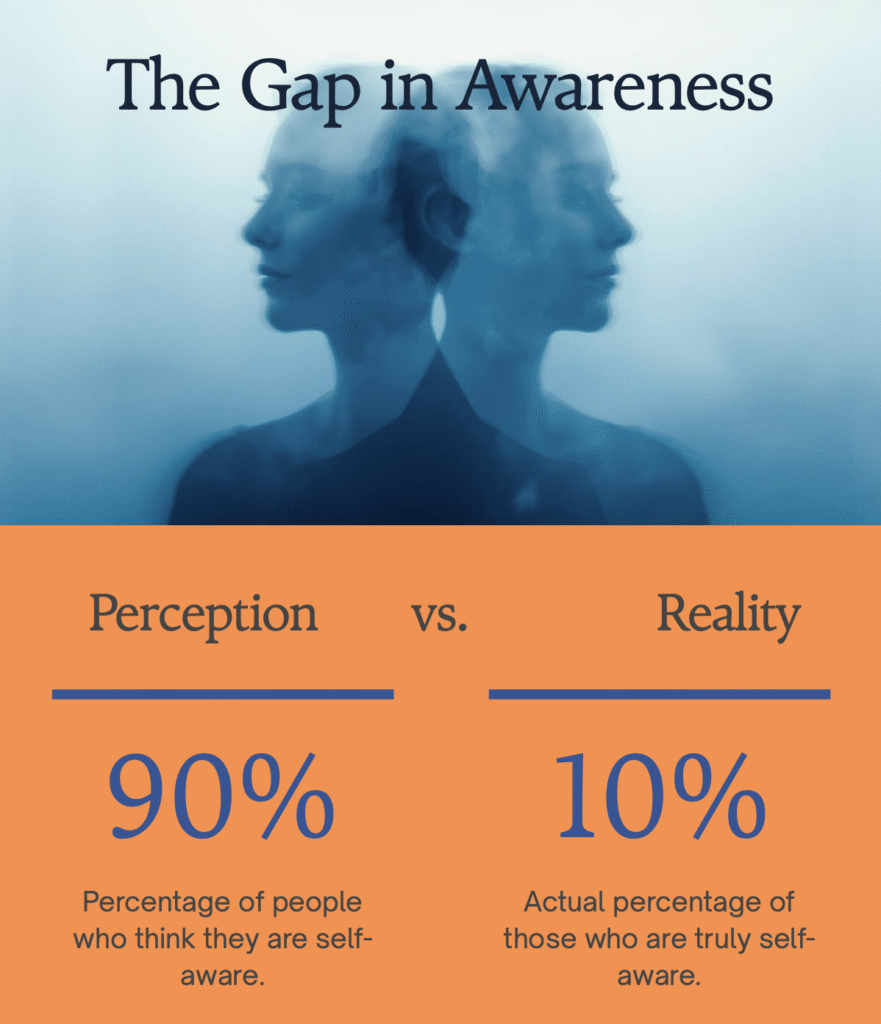
Organisational psychologist Dr Tasha Eurich’s research suggests that only 10–15% of people are actually self-aware.
This gap matters in coaching because developmental conversations often rely on self-report.
-
Insight does not automatically lead to change
Behaviour change research (Prochaska & DiClemente’s Stages of Change) demonstrates that awareness is only one stage in a much broader process.
Understanding a pattern cognitively does not ensure it shifts under real-world conditions.
Coaching frequently operates in this gap between understanding and integration.
-
Self–other discrepancy is developmentally significant
Leadership and 360 feedback research shows that discrepancies between self-ratings and others’ ratings are often where the most meaningful developmental work occurs.
When individuals rate themselves significantly differently from how others experience them, it creates a productive developmental tension.
CTRL operationalises this principle within a coaching framework.
CTRL makes awareness more observable and coachable by mapping how clients believe they respond in challenging situations.
It structures reflective dialogue without labelling personality or predicting behaviour.
Instead, it maps perception in context:
- How clients perceive their own awareness patterns in challenging situations.
- How a trusted external observer experiences them.
- Where those perspectives converge or diverge, creating structured material for reflective dialogue.
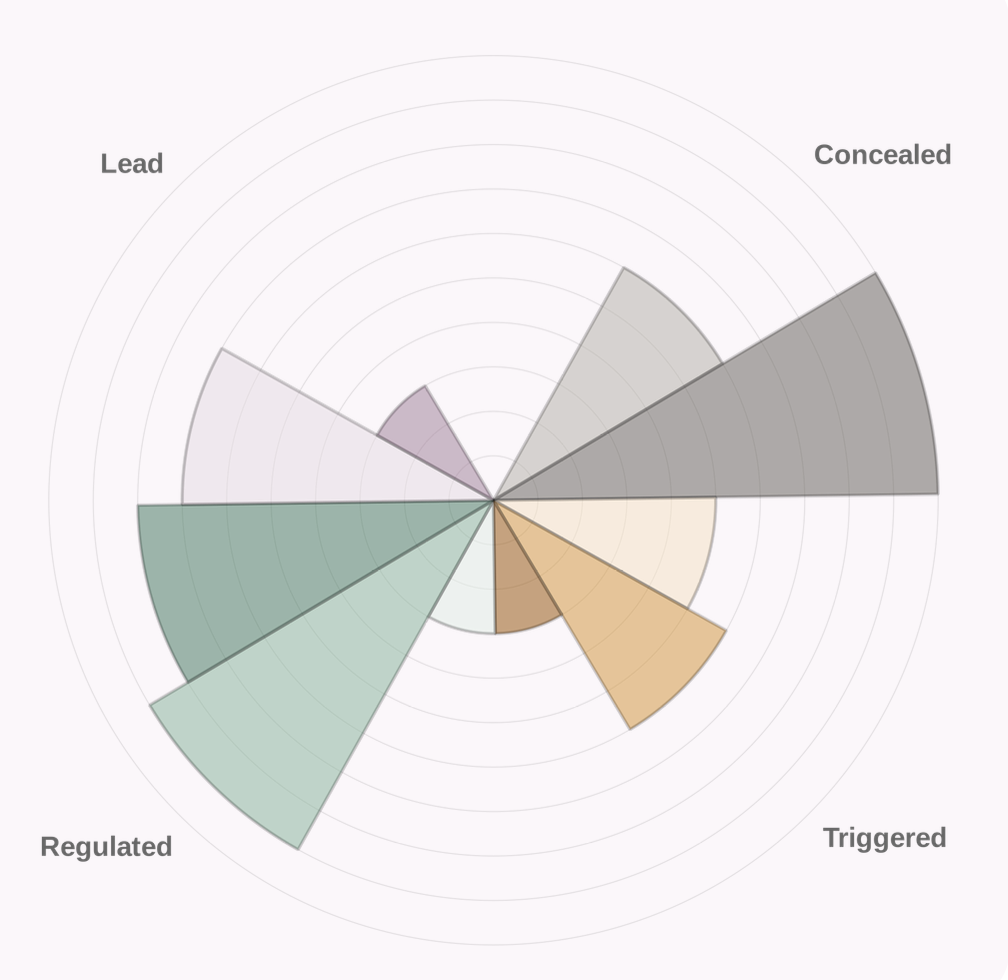
Example output: distribution across CTRL states.
The client completes the CTRL assessment and instantly receives a dynamically generated profile based on frequency, sequence, and thematic patterns in their responses (not pre-written generic text).
A nominated colleague answers the same scenarios on behalf of the client, i.e. how they believe the client would respond. Important: The client and observer do not see each other’s raw responses; those remain stored behind the scenes.
The client receives a 180 report highlighting alignments and mis-matches. The coach receives the client profile, the 180 combined report, and a coach report with prepared questions based on the combined view.
The focus is not labelling behaviour. It is exploring perception and impact to support meaningful developmental dialogue.
Grounded in established research on self-awareness and behavioural development, CTRL provides:
- A structured starting point for exploring perception gaps
- Evidence-informed framing for difficult conversations
- A way to move beyond purely self-reported insight
- A developmentally safe way to introduce external perspective
It does not replace personality assessments or psychometrics.
It adds a perception layer that complements them.

CTRL is not designed to create instant behavioural change.
It is designed to make patterns visible.
In executive coaching, development rarely happens through dramatic shifts. It happens through:
- Increased noticing
- More deliberate pauses
- Slightly different responses in familiar situations
A one-degree shift in awareness, repeated over time, changes direction.
CTRL helps coaches and clients orient themselves — not climb a ladder of improvement, but adjust trajectory with greater clarity.
The aim is not to “become someone else”. It is to respond with more awareness than before.
The CTRL Assessment
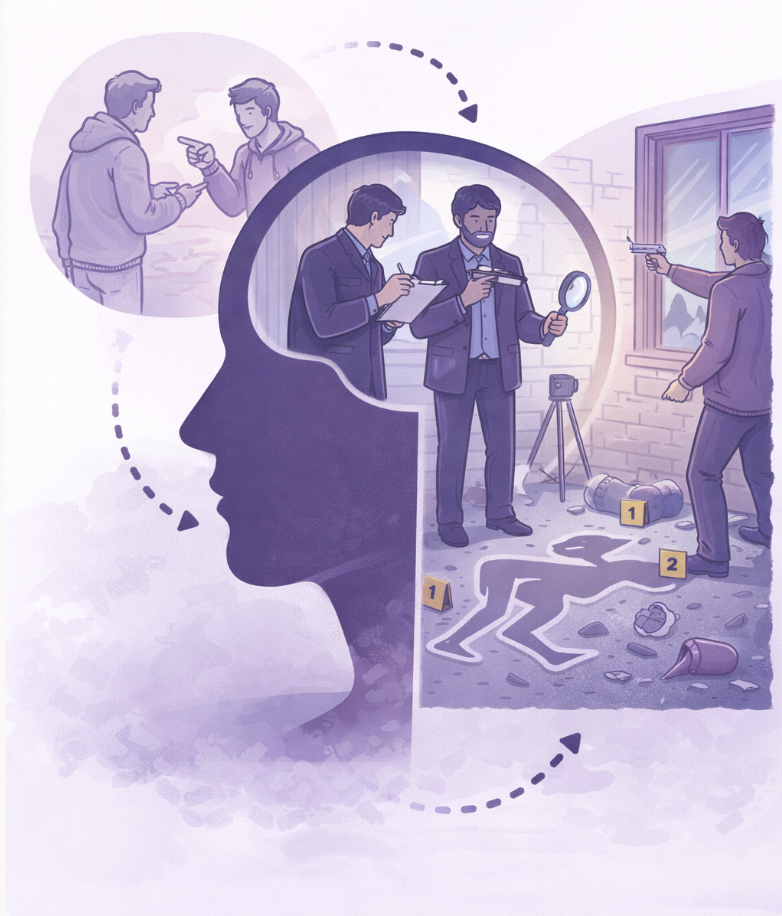
The CTRL diagnostic begins with a structured assessment. Rather than asking participants to rate their own self-awareness, the assessment presents short, realistic relational scenarios and asks them to choose the response that most closely reflects how they would actually act.
These comparative choices reduce self-report bias and surface natural awareness orientation in context.
Across 12 scenarios, the assessment tracks:
- Distribution across awareness states
- Movement between states
- Direction of travel
- Recovery and retreat patterns
The result is not a personality type, but a dynamic awareness profile.
When responses are aggregated, they map across four relational awareness states: Concealed, Triggered, Regulated and Lead.
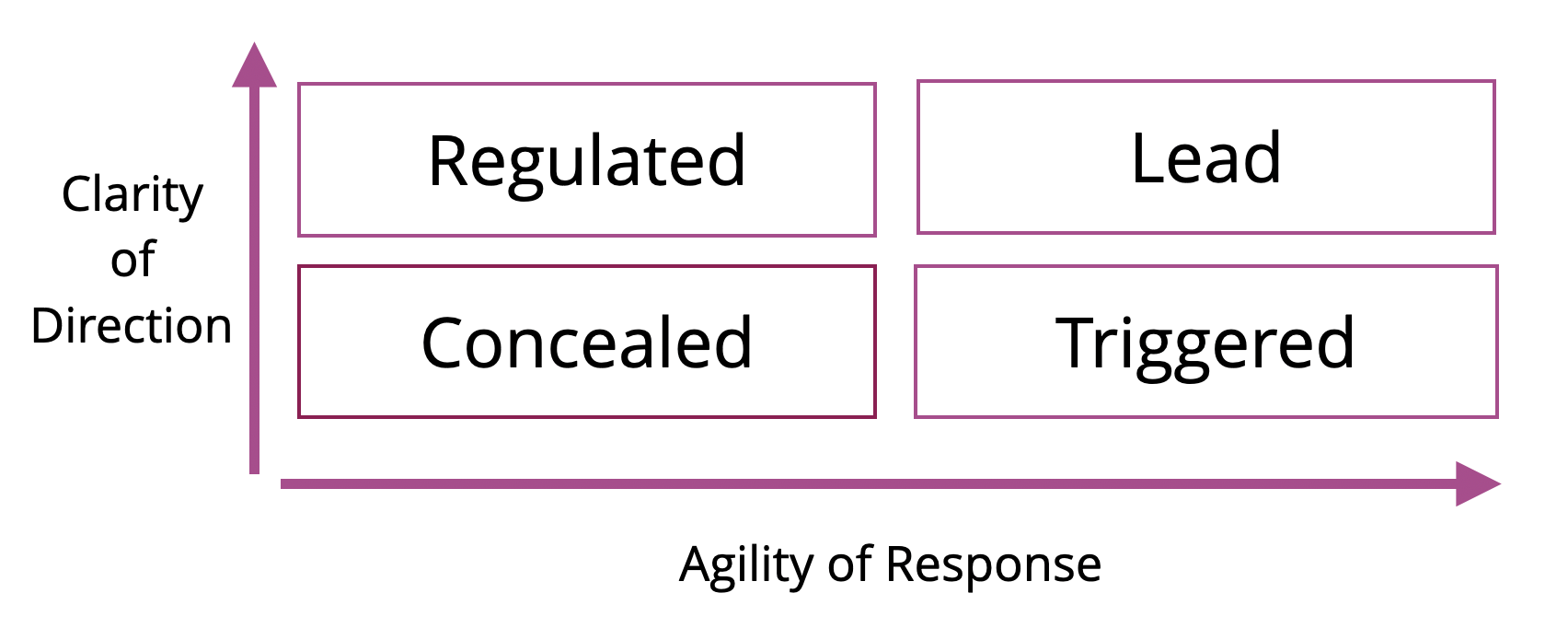
Agility of response describes how quickly someone adapts in-the-moment.
Clarity of direction describes how anchored someone remains to intent and values.
Concealed
- Protection-led orientation
- Holds back until safe
- Processes impact internally
Triggered
- Expression-led orientation
- Rapid response to tension
- Reflection follows reaction
Regulated
- Balance-led orientation
- Recognises emotion early
- Measured under pressure
Lead
- Relational-led orientation
- Tracks group dynamics
- Stabilises psychological safety
Access options
CTRL is offered as a perception-based coaching diagnostic. Most people start with a short taster, and coaches access the full diagnostic through a licence model.